
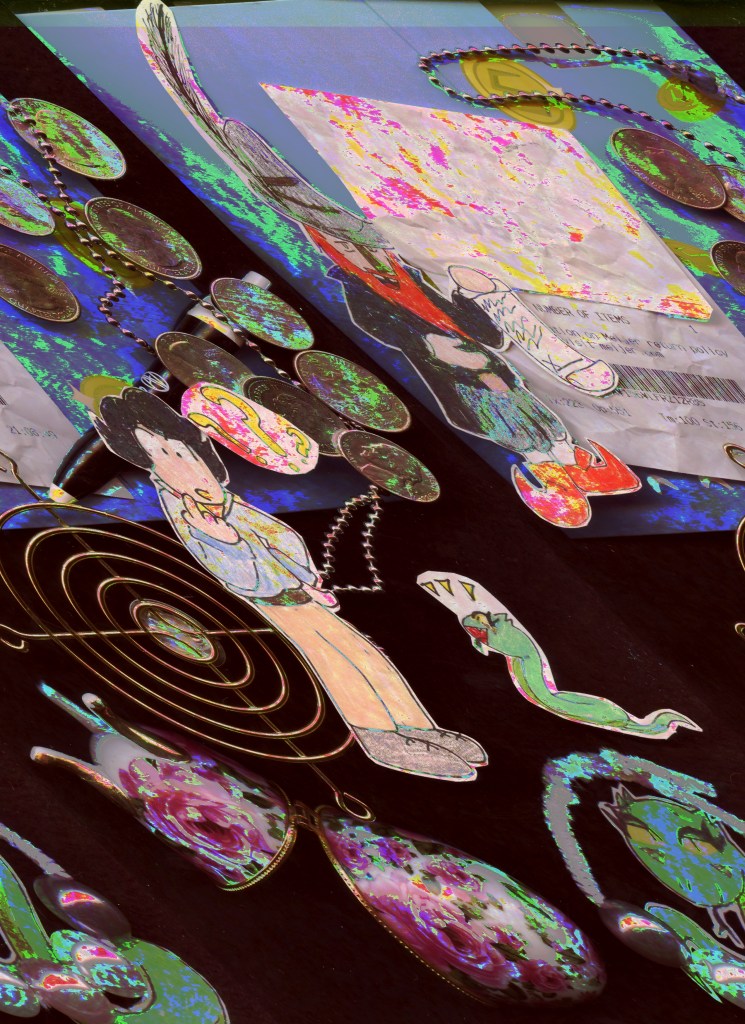
For Digital Imaging we had to find a way to create a creative glitch using our scan from the creative scan project, the above image was my result from data-bending using the audio program Audacity.
Artist Statement
“Conventionally, a glitch is an error. It is a break from an algorithmic flow. Its unanticipated appearance is simultaneously frustrating and mesmerizing” (Donaldson). Donaldson states in his article that glitches are errors, yet we are both frustrated but mesmerized by them. I agree with Donaldson in this aspect because during my glitch process I had multiple files corrupt and was forced to restart the glitching process, but when I found my result I was interested in the tilt effect that the image ended up with. I created my glitch image by data-bending in Audacity. I imported my image through U-law encoding and added reverb to the data. Adding reverb to the data caused the image to tilt and have many color distortions. I tried to change the coding of the picture in notepad programs but small alterations to the code would cause the photo to be corrupted. Audacity was the only program that I was able to create a glitched image that would not corrupt entirely. I ended up with two versions of my final image, one with tilt and color distortion and one with completely distorted visuals. I found that using a glitch in this way was very fun. Creating a piece of art with glitches on purpose was a neat concept and was enjoyable in the execution. I find that this experiment was a success because it made me test multiple ways to purposefully glitch a piece of art without ruining the image fully. I discovered that data-bending with Audacity is easier for me because I understand how some effects affect the image when translated back from raw data.
 Seth "Machete" Demeter